The View From NCS Technologies

NCS VDI Solutions at HIMSS15 Healthcare Event

Posted by John Callahan on Apr 14, 2015 10:56:00 AM

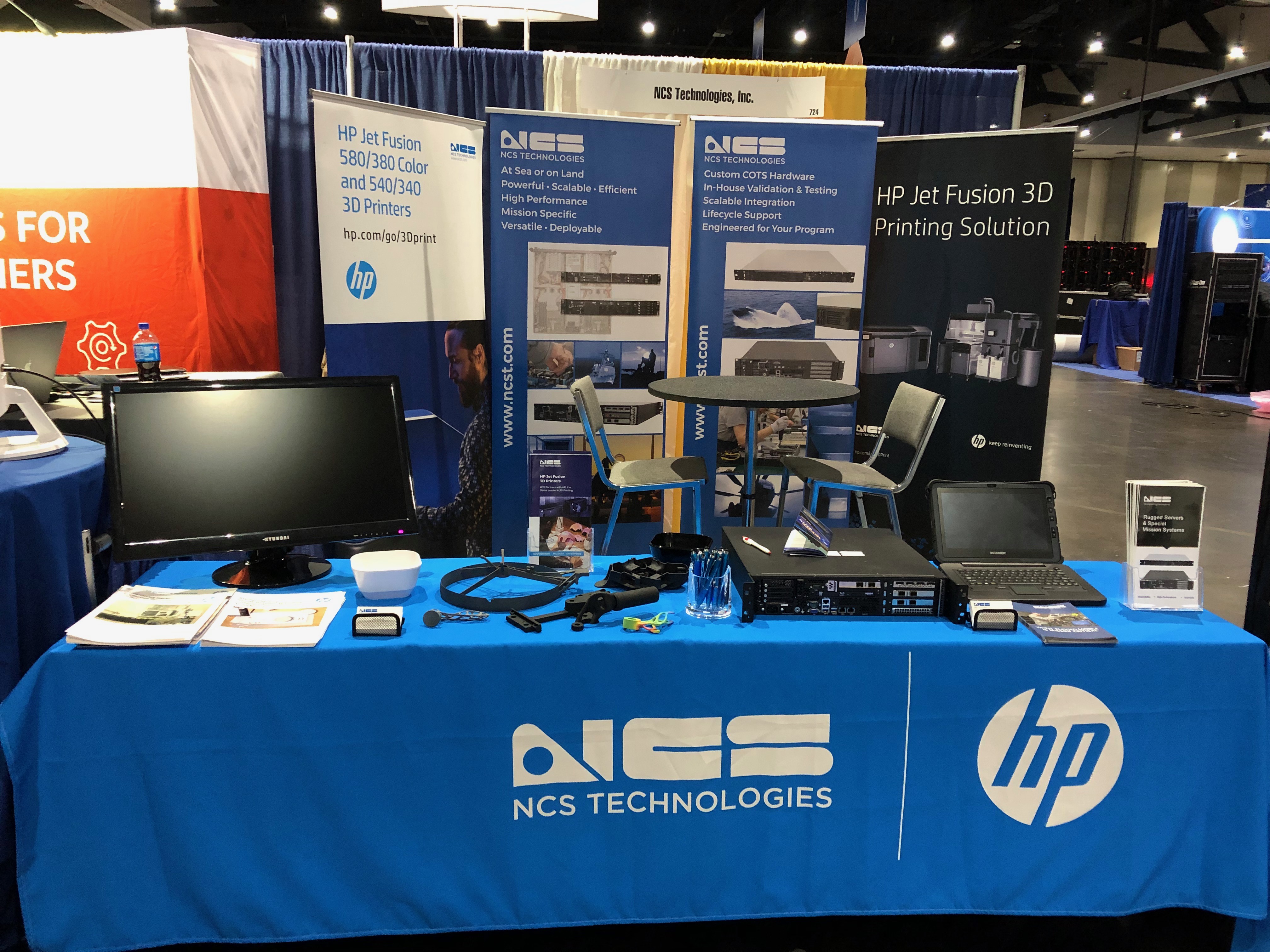
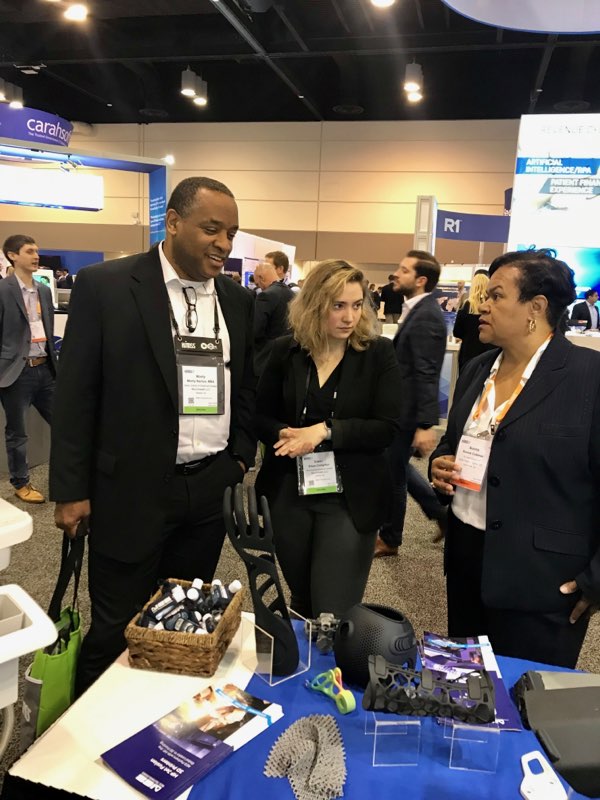
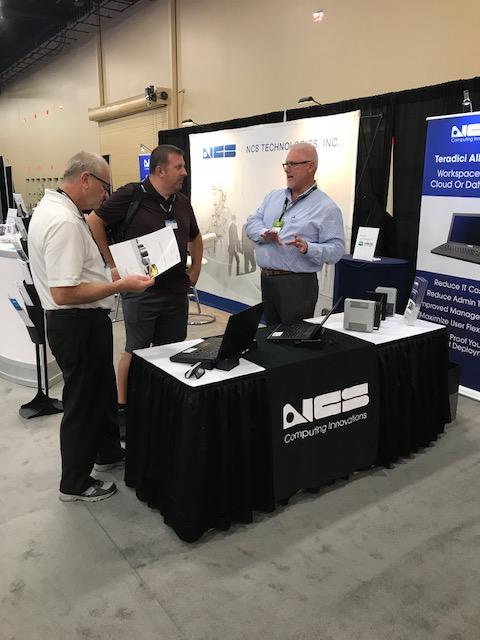
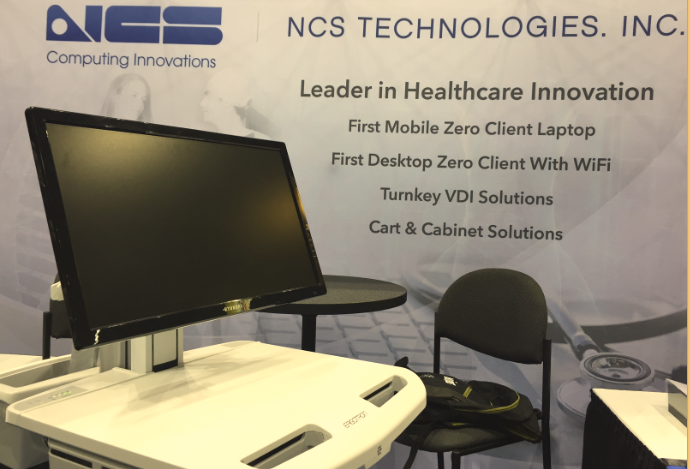
NCS is active at HIMSS15 this week, Booth 7661, McCornick Place, Chicago! HIMSS15 is the industry's largest healthcare event.

We are featuring a range of solutions applicable to healthcare, including desktop and mobile zero clients, virtual desktop infrastructure (VDI) and mobile computer cart technologies.HIMSS_selfie

VDI and desktop virtualization are increasingly being considered as an important tool as data breaches continue to be discovered in the healthcare industry.

Organizations Are Vulnerable and Damage Is Expensive 

The reality is that healthcare providers of all sizes are vulnerable. Hospitals are especially targeted and in need of strong security. Beyond loss of business and legal action, there is also the inevitable damage to reputation and brand, and the lost productivity of implementing forensics, remediation and regulatory compliance (HIPAA Privacy and HIPAA Security rules). In short, this an expensive nightmare that can and should be avoided.

Virtual and Mobile Solutions Will Help

Innovative NCS solutions featured at Booth 7661 address these issues.

Read More

Topics: VDI, Healthcare

Financial Data Protection & VDI

Posted by John Callahan on Apr 3, 2015 12:35:05 PM

It makes sense that data security is of vital importance in the financial sector. After all, financial data is among the most sensitive type of information that businesses possess, and is probably the most desirable information to would-be hackers. Companies that work with financial data are responsible for protecting this information- and failing to properly do so can have potentially disasterous outcomes for the business and its customers.

Read More

Topics: VDI, Financial Sector

VDI & the Healthcare Data Breaches

Posted by John Callahan on Mar 26, 2015 2:17:00 PM

Healthcare_imageVDI and desktop virtualization are increasingly being considered as an important tool as data breaches continue to be discovered in the healthcare industry.

Everyone has heard about the breach involving Anthem, Inc., the second biggest health insurer in the U.S. It affects some 80 million customers and employees and is said to be the largest hack to a healthcare entity ever. Either you personally are affected or you know someone who is.

But Anthem isn't alone. Just in the past year, there are many other healthcare organizations reporting sizable breaches. They include Montana Department of Public Health and Human Services, Texas Health and Human Services, and Community Health Systems, to name a few.

Organizations of All Sizes Are Vulnerable

The reality is that healthcare providers of all sizes are vulnerable. Hospitals are especially targeted and in need of strong security.

I found a recent news item especially interesting in this context. According to a TransUnion Healthcare report, more than half of recent hospital patients are willing to switch healthcare providers if their current provider undergoes a data breach. And the younger you are (and likely more savvy about computers and the internet), the more likely you are to ditch your provider for poor performance.

The Damage to Organizations Is Immediate -- and Expensive 

Data breaches are painful for everyone. Looking at the healthcare provider, if the organization is large enough, class-action lawsuits may be filed in the first 24 hours after public notification. But beyond the courtroom, there is also the inevitable damage to reputation and brand, and the lost productivity of implementing forensics, remediation and regulatory compliance (HIPAA Privacy and HIPAA Security rules). In short, this an expensive nightmare that can and should be avoided. 

IT administrators must consider all the places in the network where Protected Health Information (PHI) and electronic PHI (ePHI) are gathered and stored. Strategies for protecting the datacenter can be implemented at the server but the challenge remains about keeping ahead of threats at the desktop level.

Zero Clients Help Solve the Data Breach Puzzle

One of the most promising approaches involves protecting sensitive information with zero clients at the end point. Healthcare providers are constantly accessing sensitive patient records with very personal information.  Zero clients allow you to enable a remote or mobile worker and still comply with HIPAA, PHI and ePHI by restricting the ability to download and store data locally.  Nothing stored, nothing lost.

Read More

Topics: VDI, Healthcare

Cirrus LT Featured at Cloud Expo Europe

Posted by John Callahan on Mar 10, 2015 3:06:03 PM

Zero Client Laptop at Cloud Expo Europe

There is growing momentum for moving beyond old-style thin clients to implement the latest generation zero clients as a part of the evolution towards Virtual Desktop Infrastructure (VDI). A good example is the UK availability of Cirrus LT mobile PCoIP zero client laptop, announced earlier this week. Cirrus LT is optimized for the UK market and is being showcased this week at the Cloud Expo Europe held in London - the biggest and best attended cloud event in the world.

Read More

Topics: VDI, PCoIP

Want High-Performance VDI? Go hyper-converged.

Posted by Mike Turicchi on Mar 4, 2015 10:53:00 AM

If you are considering migrating to a virtual desktop infrastructure but are afraid performance for your demanding users will suffer, a hyper-converged appliance might just be your answer. Most IT administrators are leery about moving their knowledge workers and powers users to a virtual environment because of historically poor performance associated with latency and bandwidth constraints. Recent advancements in Solid State Drives (SSDs), GPU technology, and more efficient network protocols coupled with improvements in the hypervisor’s file system have made moving these workloads to VDI not only possible but, in many cases, a better experience for the end user.

Read More

Topics: VDI

Power Users & CAD/Multimedia Users

Posted by Scott Drucker on Feb 27, 2015 7:00:00 AM

Final Entry Of A Multi-Part Series

POWER USERS

Over the past week, I have been discussing the various kinds of workers who are likely to be impacted by virtualization. Power Users, like the more senior Knowledge Workers discussed in the last blog, generally are tough challenges for virtualization. These are the folks that require the power of a desktop, the proprietary peripherals, and resource intensive software applications. 

Read More

Topics: VDI, Virtualized Users

Part 4: Task Workers & Knowledge Workers

Posted by Scott Drucker on Feb 25, 2015 11:09:00 AM

Part Four of a Multi-Part Blog Series

As I mentioned in Parts 1, 2 & 3 of this blog series, when a company expresses the intent to move toward virtualization, it is prudent to ask them if they have an idea, or better yet a list, of the users and type of users that they intend to virtualize.

The questions quickly pop up, including what type of worker do you recommend we start with on the way to full virtualization? l have discussed the differences between a deployment with Persistent Desktops versus Non-Persistent Desktops, Linked Clones versus Full Clones, and Kiosk Workers. Today I'd like to discuss Task Workers and Knowledge Workers.

Read More

Topics: VDI, Virtualized Users

Part 3: VDI and Virtualized Kiosk Workers

Posted by Scott Drucker on Feb 23, 2015 7:00:00 AM

Part 3 Of A Multi-Part Blog Series

As I mentioned in Parts 1 & 2 of this blog series, when a company expresses the intent to move toward virtualization, it is wise to ask them if they have a list of users and type of users that they intend to virtualize.

Read More

Topics: Virtualized Users

Part 2: Virtualized Linked Clones Versus Full Clones

Posted by Scott Drucker on Feb 20, 2015 7:00:00 AM

Part 2 Of A Multi-Part Blog Series

As I mentioned in Part 1 of this blog series, when a company expresses the intent to move toward virtualization, it is wise to ask them if they have a list of users and type of users that they intend to virtualize.

The questions quickly pop up, including what type of worker do you recommend we start with on the way to full virtualization? In the first blog l discussed the differences between a deployment with Persistent Desktops versus Non-Persistent Desktops. Today I'm here to talk about Linked Clones versus Full Clones

Read More

Topics: Virtualized Users

Defining Your VDI Users

Posted by Scott Drucker on Feb 18, 2015 1:43:00 PM

Multi-Part Blog Series

 Virtualization: The Many Types of Users

 In my experience, when a company expresses the intent to move toward virtualization, it is wise to ask them if they have a list of users and type of user that they intend to virtualize.

It seems that the minute that question leaves my mouth, a series of questions pop up, including what type of workers are there for VDI? Is there a type that shouldn’t be included or virtualized? What type of worker do you recommend we start with on the way to full virtualization?

Read More

Topics: VDI, Virtualized Users