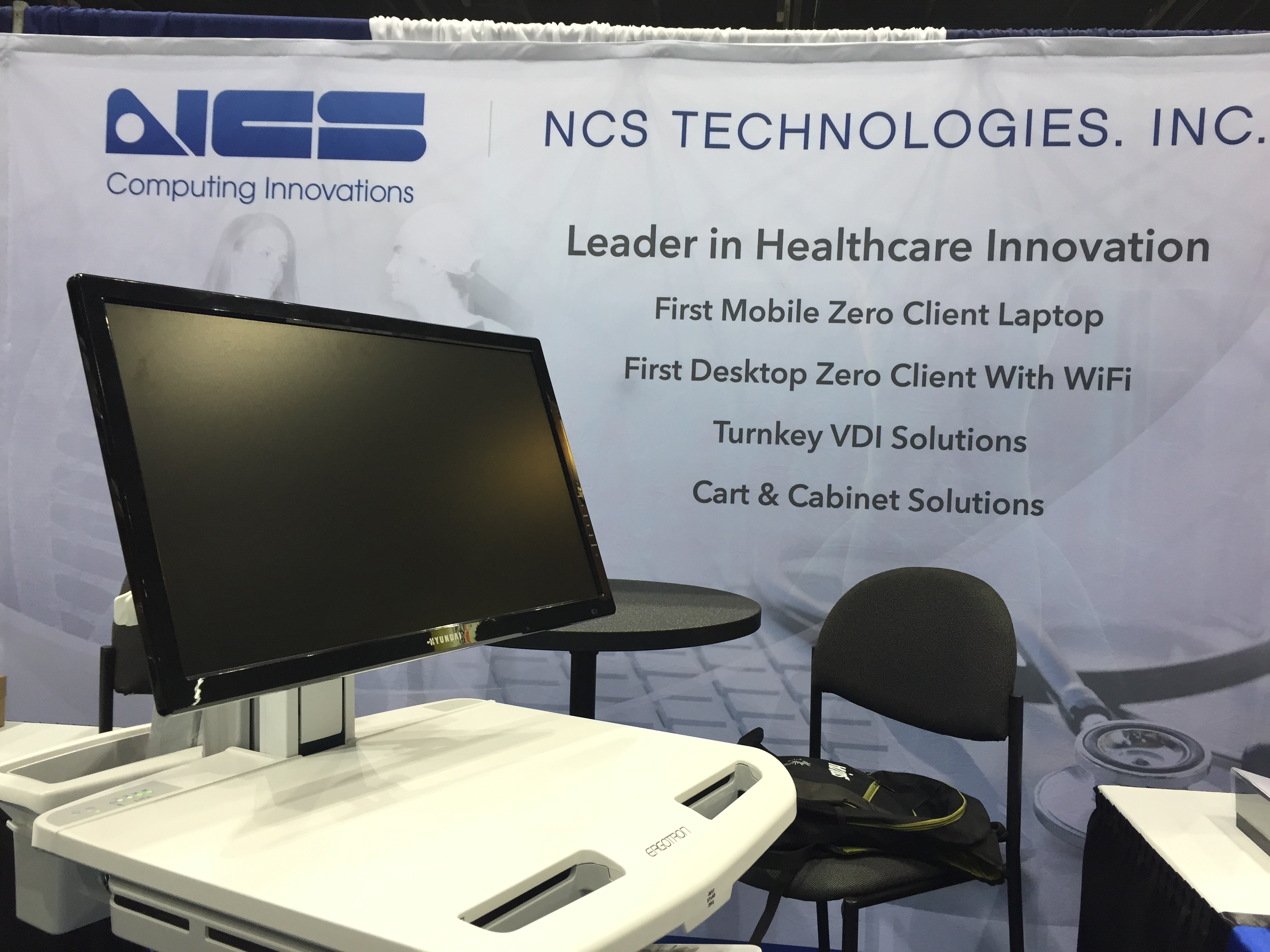
While NCS Technologies is known for providing a wide variety of computing solutions to government, the military and the intelligence community, healthcare providers are among the most persistent visitors to our website.


While NCS Technologies is known for providing a wide variety of computing solutions to government, the military and the intelligence community, healthcare providers are among the most persistent visitors to our website.
Topics: VDI, Healthcare
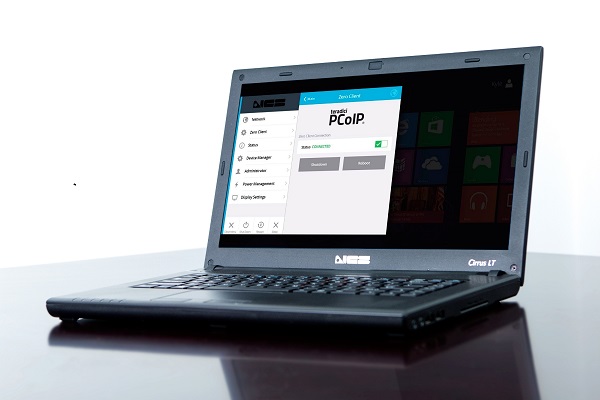
Our customers approach VDI implementations many different ways. Some IT administrators look at the end-to-end approach, while others have built out a heavily virtualized data center but are only dipping their toes in the water with thin or zero client endpoints.
VDI benefits are understood: improving the reliability and scalability of their investments in storage and compute resources, better network performance, reduced complexity and administrative costs and improved security at the end points (desktop and mobile). But what is your implementation strategy?
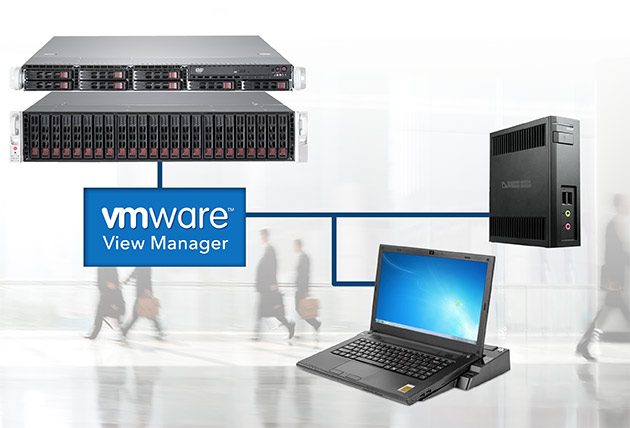
In our ongoing discussions with customers, both individually and at trade shows, we find that IT administrators consider a transition to VDI for many reasons, including improving the reliability and scalability of their investments in storage and compute resources in the data center, better network performance, reduced complexity and administrative costs and improved security at the end points (desktop and mobile).
The U.S. Defense Information Systems Agency's new operational role as network defender creates a formal relationship between DISA, U.S. Cyber Command and the command's military service components. The goal is to improve cyber security, but a successful strategy depends on a matrix of participating organizations adapting technical solutions and adopting enterprise management to improve efficiency, security and reliability.
This partner community, together with suppliers, will meet at the Baltimore Convention Center next Tuesday through Thursday for the 2015 Defensive Cyber Operations Symposium. NCS Technologies will be there at Booth #5023. We invite you to meet us at the booth!
As has been demonstrated month after month, including news of the latest the December hack into Office of Personnel Management data, hackers never rest in seeking out security vulnerabilities in U.S. government civilian, military and intelligence networks.
3 Cyber Security Solutions Are A Must
At the Cyber Operations Symposium, NCS will demonstrate 3 cyber security technologies which are a must for every government agency.
The first cyber security solution is SecureView. SecureView represents the latest approach to the multi-level network problem. SecureView is a multi-level virtual platform which allows a user to run multiple securely isolated environments on a single PC, provide hardware-enforced security and deliver superior virtualization in the most demanding environments. NCS will demonstrate AFRL-certified solutions featured on the Hardware Compatibility List.
The next technology which is critical to improved security, manageability and IT efficiency is a comprehensive VDI network solution. NCS will discuss its VDI solutions which includes all three elements (storage, compute & network), software and services, and endpoints.
IT departments remain on a continuous treadmill of cyber defense, updates and patches. Managers realize their networks remain vulnerable at the weakest spot in the perimeter, often a desktop lagging behind on security updates, or an operating system breached because of an exposure to a zero-day vulnerability. This area is the third solution we will discuss and showcase at the Cyber Operations Symposium, virtual PCoIP zero client endpoints. Zero clients provide super strong security on the front lines (at the desktop or laptop).
NCS is active at HIMSS15 this week, Booth 7661, McCornick Place, Chicago! HIMSS15 is the industry's largest healthcare event.
We are featuring a range of solutions applicable to healthcare, including desktop and mobile zero clients, virtual desktop infrastructure (VDI) and mobile computer cart technologies.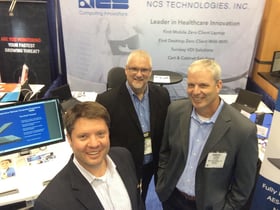
VDI and desktop virtualization are increasingly being considered as an important tool as data breaches continue to be discovered in the healthcare industry.
Organizations Are Vulnerable and Damage Is Expensive
The reality is that healthcare providers of all sizes are vulnerable. Hospitals are especially targeted and in need of strong security. Beyond loss of business and legal action, there is also the inevitable damage to reputation and brand, and the lost productivity of implementing forensics, remediation and regulatory compliance (HIPAA Privacy and HIPAA Security rules). In short, this an expensive nightmare that can and should be avoided.
Virtual and Mobile Solutions Will Help
Innovative NCS solutions featured at Booth 7661 address these issues.
Topics: VDI, Healthcare

It makes sense that data security is of vital importance in the financial sector. After all, financial data is among the most sensitive type of information that businesses possess, and is probably the most desirable information to would-be hackers. Companies that work with financial data are responsible for protecting this information- and failing to properly do so can have potentially disasterous outcomes for the business and its customers.
Topics: VDI, Financial Sector
 VDI and desktop virtualization are increasingly being considered as an important tool as data breaches continue to be discovered in the healthcare industry.
Everyone has heard about the breach involving Anthem, Inc., the second biggest health insurer in the U.S. It affects some 80 million customers and employees and is said to be the largest hack to a healthcare entity ever. Either you personally are affected or you know someone who is.
But Anthem isn't alone. Just in the past year, there are many other healthcare organizations reporting sizable breaches. They include Montana Department of Public Health and Human Services, Texas Health and Human Services, and Community Health Systems, to name a few.
Organizations of All Sizes Are Vulnerable
The reality is that healthcare providers of all sizes are vulnerable. Hospitals are especially targeted and in need of strong security.
I found a recent news item especially interesting in this context. According to a TransUnion Healthcare report, more than half of recent hospital patients are willing to switch healthcare providers if their current provider undergoes a data breach. And the younger you are (and likely more savvy about computers and the internet), the more likely you are to ditch your provider for poor performance.
The Damage to Organizations Is Immediate -- and Expensive
Data breaches are painful for everyone. Looking at the healthcare provider, if the organization is large enough, class-action lawsuits may be filed in the first 24 hours after public notification. But beyond the courtroom, there is also the inevitable damage to reputation and brand, and the lost productivity of implementing forensics, remediation and regulatory compliance (HIPAA Privacy and HIPAA Security rules). In short, this an expensive nightmare that can and should be avoided.
IT administrators must consider all the places in the network where Protected Health Information (PHI) and electronic PHI (ePHI) are gathered and stored. Strategies for protecting the datacenter can be implemented at the server but the challenge remains about keeping ahead of threats at the desktop level.
Zero Clients Help Solve the Data Breach Puzzle
One of the most promising approaches involves protecting sensitive information with zero clients at the end point. Healthcare providers are constantly accessing sensitive patient records with very personal information. Zero clients allow you to enable a remote or mobile worker and still comply with HIPAA, PHI and ePHI by restricting the ability to download and store data locally. Nothing stored, nothing lost.
Topics: VDI, Healthcare

There is growing momentum for moving beyond old-style thin clients to implement the latest generation zero clients as a part of the evolution towards Virtual Desktop Infrastructure (VDI). A good example is the UK availability of Cirrus LT mobile PCoIP zero client laptop, announced earlier this week. Cirrus LT is optimized for the UK market and is being showcased this week at the Cloud Expo Europe held in London - the biggest and best attended cloud event in the world.
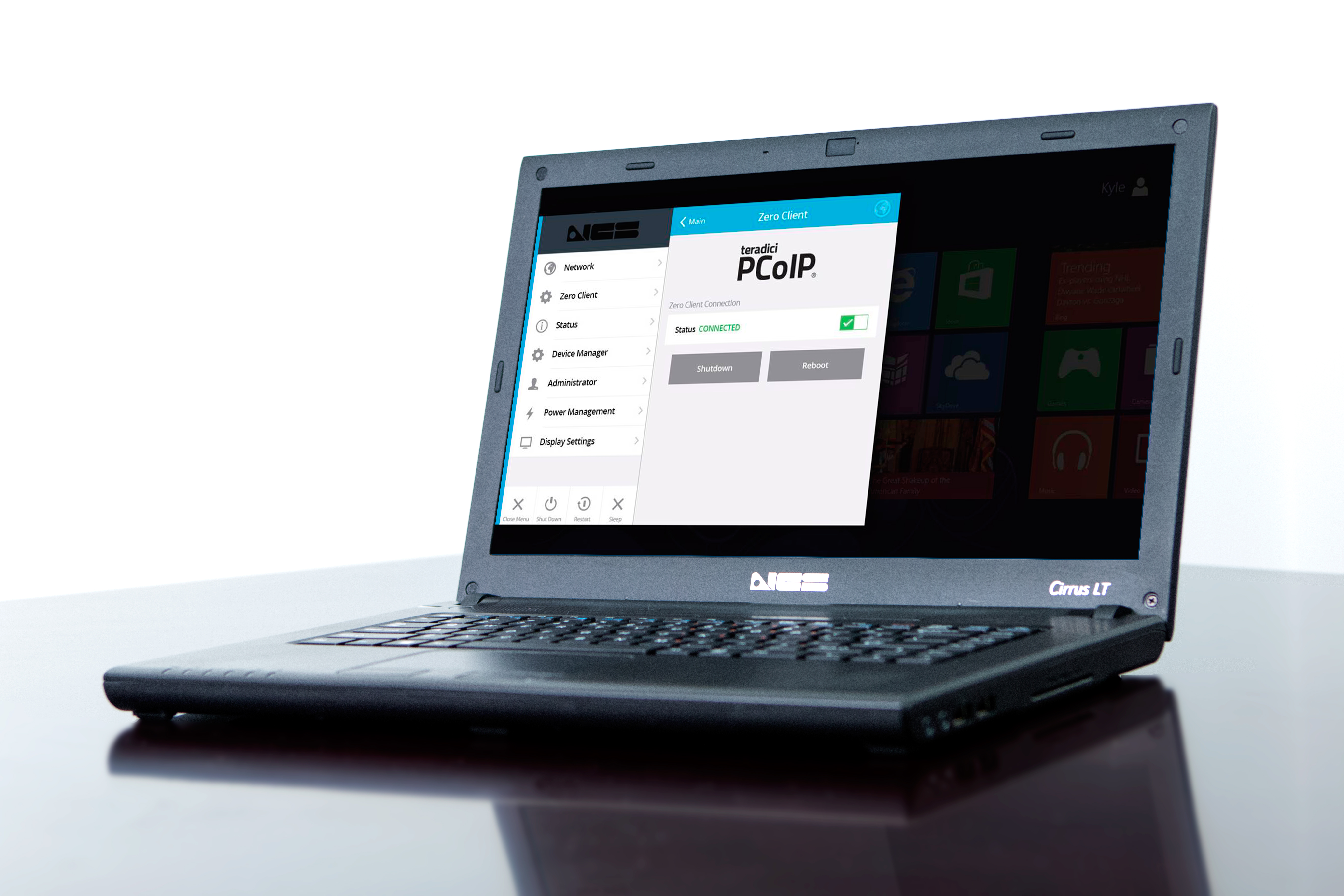
Research on VDI, thin clients and desktop virtualization inevitably leads to articles on how to deal with latency issues and the end user experience. It only makes sense that pushing data on round trips between client and cloud servers could create some degradation in performance, especially involving bandwidth-hungy applications. Concerns about performance have concerned IT administrators and end users considering significant investments in desktop virtualizaiton products. And an Internet search of these issues uncovers thousands of articles and papers suggesting workarounds.
In doing market research I have come across a report on virtualization from a top tier industry analyst group. In order to project market trends, the report analyst lumped together thin clients and zero clients used in desktop virtualization. This would be like an auto report lumping together Civic sedans and CR-Z sport hybrids. Both are compact Hondas and both are fuel efficient, but users are probably looking for totally different driving experiences in these vehicles. So I believe the analyst in writing that particular research report on the virtualization market was not being as precise with his subscribers as he needed to be.
Topics: VDI